DIST — Design, Installation, Support, Technology
Home
Services
Audiovisual & CollaborationConference Room AVVideo SystemsAudio SystemsControl & Automation
Managed IT & CloudManaged IT ServicesMicrosoft 365Cloud Solutions
Physical SecurityCCTV & SurveillanceAccess Control
Infrastructure & DeploymentLow-Voltage CablingNationwide Truck Rollouts
Projects
Locations
New York CityAudio Visual Integration
Resources
BlogInsights & industry updatesPress & MediaNews coverage & features
AboutContact
(212) 206-0794
DIST

Design, Installation, Support and Technology — integrated AV, IT and security solutions for businesses.

Audiovisual

  • Conference Room AV
  • Video Systems
  • Audio Systems
  • Control & Automation

IT & Security

  • Managed IT Services
  • Microsoft 365
  • Cloud Solutions
  • CCTV & Surveillance
  • Access Control

Company

  • About
  • Projects
  • Contact
  • Client information
  • Vendor information

Contact

  • (212) 206-0794
  • [email protected]
  • Mon–Fri 8:00 AM – 5:00 PM
  • 24/7 Help Desk Support
Ask AI about DISTGet an independent summary of who we are and what we do.
  • ChatGPT
  • Claude
  • Perplexity
  • Google AI
  • Grok
© 2026 DIST. All rights reserved.
  • Privacy Policy
  • Sitemap
DIST — Design, Installation, Support, Technology
Home
Services
Audiovisual & CollaborationConference Room AVVideo SystemsAudio SystemsControl & Automation
Managed IT & CloudManaged IT ServicesMicrosoft 365Cloud Solutions
Physical SecurityCCTV & SurveillanceAccess Control
Infrastructure & DeploymentLow-Voltage CablingNationwide Truck Rollouts
Projects
Locations
New York CityAudio Visual Integration
Resources
BlogInsights & industry updatesPress & MediaNews coverage & features
AboutContact
(212) 206-0794
DIST

Design, Installation, Support and Technology — integrated AV, IT and security solutions for businesses.

Audiovisual

  • Conference Room AV
  • Video Systems
  • Audio Systems
  • Control & Automation

IT & Security

  • Managed IT Services
  • Microsoft 365
  • Cloud Solutions
  • CCTV & Surveillance
  • Access Control

Company

  • About
  • Projects
  • Contact
  • Client information
  • Vendor information

Contact

  • (212) 206-0794
  • [email protected]
  • Mon–Fri 8:00 AM – 5:00 PM
  • 24/7 Help Desk Support
Ask AI about DISTGet an independent summary of who we are and what we do.
  • ChatGPT
  • Claude
  • Perplexity
  • Google AI
  • Grok
© 2026 DIST. All rights reserved.
  • Privacy Policy
  • Sitemap
DIST — Design, Installation, Support, Technology
Home
Services
Audiovisual & CollaborationConference Room AVVideo SystemsAudio SystemsControl & Automation
Managed IT & CloudManaged IT ServicesMicrosoft 365Cloud Solutions
Physical SecurityCCTV & SurveillanceAccess Control
Infrastructure & DeploymentLow-Voltage CablingNationwide Truck Rollouts
Projects
Locations
New York CityAudio Visual Integration
Resources
BlogInsights & industry updatesPress & MediaNews coverage & features
AboutContact
(212) 206-0794
Back to Blog
Sep 10, 2026AUDIO/VISUAL

Do You Need a Permit for AV and Low Voltage Work in Miami-Dade or Broward?

Gerson Carrillo

Gerson Carrillo

Director Of Professional Services at Support305
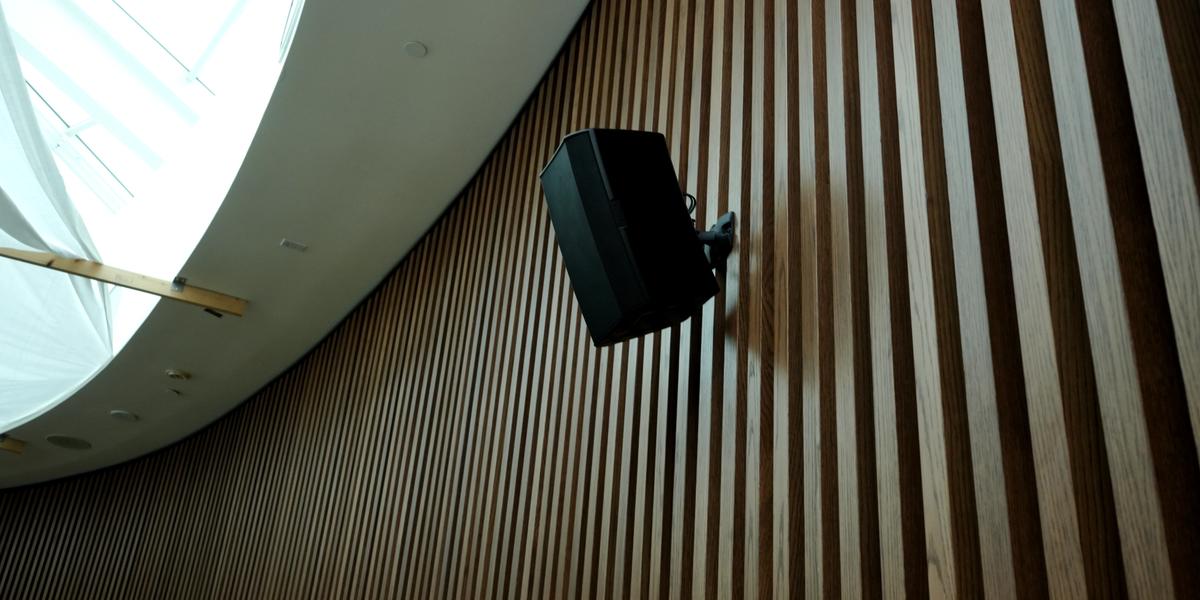
Do You Need a Permit for AV and Low Voltage Work in Miami-Dade or Broward?

Table of contents

  • Key Takeaways
  • Why This Matters Before It Matters
  • When a Permit Is Required in Miami-Dade
  • Which Florida License Covers AV and Low Voltage Work
  • ES Versus EF Versus EG: The Distinction That Trips People Up
  • Certified Versus Registered, and County Competency Requirements
  • What Else Gets Inspected on a Commercial AV Job
  • What Happens When It Is Done Unpermitted
  • How to Verify a Contractor in Two Minutes
  • Permit and Licensing Verification Checklist
  • Frequently Asked Questions
  • The Bottom Line

Table of contents

  • Key Takeaways
  • Why This Matters Before It Matters
  • When a Permit Is Required in Miami-Dade
  • Which Florida License Covers AV and Low Voltage Work
  • ES Versus EF Versus EG: The Distinction That Trips People Up
  • Certified Versus Registered, and County Competency Requirements
  • What Else Gets Inspected on a Commercial AV Job
  • What Happens When It Is Done Unpermitted
  • How to Verify a Contractor in Two Minutes
  • Permit and Licensing Verification Checklist
  • Frequently Asked Questions
  • The Bottom Line

For commercial AV and low voltage work in Miami-Dade, the answer is generally yes. The county's low voltage permit exemptions apply only to single-family residences, duplexes and townhouses, and they explicitly exclude condominiums. Permits are still required for commercial work, including multi-family buildings such as condominiums and apartments, and they are still required for commercial installations in existing buildings even where no renovation or alteration is being performed. Miami-Dade defines low voltage as under 98 volts. Separately from permitting, Florida requires a license to install low voltage wiring inside a structure. Requirements vary by municipality within each county, so confirm with the building department with jurisdiction over your specific address.

Key Takeaways

  • Commercial means permitted. In Miami-Dade, the residential low voltage permit exemptions do not extend to commercial work or to multi-family buildings including condominiums.
  • An existing building is not an exemption. Permits are still required for commercial installations in existing buildings where no renovation or alteration is happening. Adding a conference room system to a finished office still requires one.
  • A license is required to pull cable inside a structure. DBPR's position is that installing wiring within a structure requires a license, including for cable TV outlets, satellite outlets, surround sound speaker systems and computer networks.
  • ES-069 is the license that covers AV and data cabling. The Limited Energy Systems Specialty Contractor category, class code 069, formerly called Low Voltage Systems Specialty, is scoped under Rule 61G6-7.001(4) F.A.C.
  • ES does not cover alarms. Burglar, fire and medical alarm work requires EF or EG. An integrator holding only ES cannot legally install your fire alarm.
  • Certified is statewide, registered is not. A certified license works anywhere in Florida. A registered license only works in the jurisdiction that issued it.
  • Verify, do not trust. DBPR maintains a public license lookup. Checking takes two minutes and is the single most useful piece of vendor diligence available to you.

Why This Matters Before It Matters

Most people encounter this topic in one of two moments, and both are bad.

The first is a red tag. An inspector on site for an unrelated trade notices unpermitted low voltage work in the ceiling, and issues a stop-work order that halts the whole fit-out, not just the AV scope.

The second is a claim or a sale. A property changes hands, or an insurer investigates a loss, and unpermitted work inside the building envelope becomes a liability that lands on the owner, not on the contractor who left three years ago.

Neither is common. Both are expensive and entirely avoidable. The five minutes of diligence described below is cheaper than either outcome by several orders of magnitude.

When a Permit Is Required in Miami-Dade

Miami-Dade County publishes low voltage permit exemptions under the Florida Building Code, and the boundaries are narrower than most people assume.

The exemptions apply to single-family residences, duplexes and townhouses. The county's general permit exemptions list also covers repair or replacement of certain low voltage devices, defined as under 98 volts, among its minor-repair exemptions for unincorporated Miami-Dade County, and it states plainly that low voltage exemptions for single-family residences, duplexes and townhouses exclude condos.

The exemptions do not apply to:

  • Commercial work of any kind
  • Multi-family buildings, explicitly including condominiums and apartments
  • Commercial installations in existing buildings, even where no renovation or alteration is being performed

That last point is the one that catches office tenants. Installing a conference room AV system into an existing, finished, occupied office is commercial work in an existing building, and it is not exempt.

The county does note that a permit is not required to install, maintain, inspect, replace or service a wireless alarm system, including ancillary components. Burglar alarm labels are issued for commercial work including multi-family buildings.

On Broward and Palm Beach: both counties operate their own building departments and municipalities within them set their own requirements. The general principle is the same, commercial low voltage work is permitted work, but the specific process, fee schedule and inspection requirements differ. Confirm with the Broward County Building Code Services Division or the Palm Beach County Building Division with jurisdiction over the address, not with the county generally, because a Fort Lauderdale address and an unincorporated Broward address are not the same jurisdiction. Miami-Dade's own permitting portal is the starting point for county addresses.

Which Florida License Covers AV and Low Voltage Work

Licensing and permitting are two separate requirements. You can hold the right license and still need a permit, and no permit cures the absence of a license.

Florida regulates this through the Department of Business and Professional Regulation and its Electrical Contractors' Licensing Board. The relevant category for AV, data and communications cabling is the Limited Energy Systems Specialty Contractor, designated ES with class code 069, formerly known as the Low Voltage Systems Specialty.

Under Rule 61G6-7.001(4) F.A.C., the ES-069 scope is limited to circuits and equipment governed by specific articles of the National Electrical Code:

[@portabletext/react] Unknown block type "comparisonTable", specify a component for it in the `components.types` prop

The scope also references 47 CFR Part 68. It does not include work performed by public utilities exempt under Section 489.503(5), Florida Statutes, or work exempt due to Florida Public Service Commission jurisdiction.

In practical terms, this is the license that covers structured cabling, conference room AV, distributed audio, video distribution, network cabling and fiber inside a commercial building.

On the license requirement itself, DBPR's guidance to the trade is direct. Asked whether a license is needed to install low voltage wiring such as cable TV outlets, satellite TV outlets, surround sound speaker systems or computer networks, the answer given is yes, a license is required if you are installing wiring within a structure, for any reason. The narrow exemption in Section 489.503 covers low voltage landscape lighting with a factory-installed cord and plug that requires no wiring modification, which is not relevant to commercial AV.

ES Versus EF Versus EG: The Distinction That Trips People Up

This is where a well-intentioned buyer gets caught, because an integrator can hold a valid license and still not be licensed for part of what they were hired to do.

[@portabletext/react] Unknown block type "comparisonTable", specify a component for it in the `components.types` prop

Classifications and scopes are established by board rule under Chapter 489, Part II, Florida Statutes. Confirm current scope language with DBPR, since rules are amended periodically. HB 1335 in 2024, for example, amended the specialty contractor definition in Section 489.505(19).

The practical consequence: if your project bundles a conference room AV system, access control and a fire alarm tie-in, one ES-licensed integrator cannot lawfully perform all of it alone. A legitimate integrator either holds the additional classifications or subcontracts to a licensed contractor who does. Florida law expressly permits a certified electrical or alarm contractor to act as prime contractor when the majority of the work falls within their license, and to subcontract the remainder to other licensed contractors. Ask which arrangement applies to your job and get it in writing.

Certified Versus Registered, and County Competency Requirements

Two license statuses exist and the difference matters if your project spans counties.

Certified licenses are issued at the state level and are valid statewide. Registered licenses are issued through local building departments and are valid only in the issuing jurisdiction. A contractor with a registered license in one county cannot lawfully contract in another.

Separately, counties including Miami-Dade have historically maintained their own contractor licensing and competency requirements layered on top of state licensing. Miami-Dade's electrical license categories include a low voltage classification requiring a master low voltage technician as qualifying agent, with a scope that excludes burglar alarm and fire alarm specialty work, mirroring the state ES boundary.

State law in this area has been in flux, with changes to local licensing authority taking effect around mid-2025. If a project spans Miami-Dade, Broward and Palm Beach, confirm current local requirements for each jurisdiction rather than assuming a state certification settles it everywhere.

For maintenance planning: the license term is biennial, with renewal by August 31 of even-numbered years and continuing education required each cycle.

What Else Gets Inspected on a Commercial AV Job

A permit brings inspection, and inspection covers more than whether the cable is the right color.

  • Plenum-rated cable. In a building with a shared return-air plenum, cable run through that space must be plenum-rated. Riser-rated or general-purpose cable in a plenum is a code violation and a fire-spread risk, and it is one of the most common findings on unpermitted work.
  • Firestopping. Every penetration through a rated wall, floor or ceiling assembly has to be sealed with an approved firestop system. An unsealed sleeve through a two-hour rated wall defeats the assembly.
  • Support and pathways. Cable supported at proper intervals, not laid on ceiling tile or draped over ductwork or sprinkler pipe. Adequate bend radius maintained, particularly on fiber.
  • Grounding and bonding. Racks and equipment properly bonded, which also happens to be the fix for a large share of hum and ground-loop audio complaints.
  • Separation from line voltage. Required clearances between low voltage and line voltage conductors maintained.
  • Structural mounting. Heavy displays and LED walls mounted to structure with appropriate hardware, which in South Florida also intersects with wind-load and hurricane considerations for anything in an exposed location.

None of these are bureaucratic box-ticking. Each one is a failure mode that shows up either as a life-safety issue or as a system that never quite works right.

What Happens When It Is Done Unpermitted

The realistic outcomes, roughly in order of likelihood:

  • Nothing, for a while. This is why the practice persists.
  • A stop-work order when an inspector on site for another trade notices it, halting the entire project rather than just the AV scope.
  • Retroactive permitting, which typically means opening finished ceilings and walls so the work can be inspected. You pay for the access work twice.
  • Failed building recertification or a stalled sale, when unpermitted work inside the envelope surfaces during due diligence.
  • A coverage dispute if there is a fire or water loss and unpermitted work is in the affected area.
  • No recourse against the contractor, because an unlicensed contractor typically has no bond, no meaningful insurance, and often no entity left to pursue.

The owner carries most of this. The contractor who saved you the permit fee does not.

How to Verify a Contractor in Two Minutes

Do this before signing, on every low voltage vendor, every time.

  • Ask for the license number and the qualifying agent's name. A legitimate contractor provides both without hesitation.
  • Look it up. DBPR maintains a public license search. Confirm the license is active, confirm the classification matches the scope of your job, and confirm the business name on the license matches the entity on your contract. A license held by an individual who is not associated with the company on your paperwork is a red flag.
  • Check the classification against your scope. ES for AV and data. EF or EG for alarms. If your scope includes both, ask who holds what.
  • Confirm the county. If the license is registered rather than certified, confirm it covers the jurisdiction of your address.
  • Ask who pulls the permit, in writing. "Permit by owner" on a commercial AV job usually means nobody is pulling one.
  • Request a certificate of insurance naming your building. Most Class A buildings in Miami require this anyway, and a contractor who cannot produce one is telling you something.

Permit and Licensing Verification Checklist

  • Confirmed whether the property is commercial or multi-family (both are permitted work in Miami-Dade).
  • Identified the building department with jurisdiction over the specific address, not just the county.
  • Confirmed with that department whether a low voltage permit is required for the scope.
  • Obtained the contractor's license number and qualifying agent name.
  • Verified the license on the DBPR public license search.
  • Confirmed the classification (ES, EF, EG) matches every part of the scope.
  • Confirmed certified versus registered status covers the project's county.
  • Confirmed in writing who pulls the permit and schedules inspections.
  • Confirmed who is responsible for any required line-voltage electrical work.
  • Confirmed plenum-rated cable is specified where the building has a shared return-air plenum.
  • Confirmed firestopping is in scope for all rated-assembly penetrations.
  • Obtained a certificate of insurance meeting building management requirements.
  • Confirmed as-built documentation and a closed permit are contract deliverables.

If you are budgeting the project at the same time, our guide to conference room AV installation cost in Miami covers where permitting and inspection sit in a realistic quote.

Frequently Asked Questions

[@portabletext/react] Unknown block type "faqSection", specify a component for it in the `components.types` prop

The Bottom Line

Two separate questions, two separate answers. Does the work need a permit? For commercial AV and low voltage in Miami-Dade, generally yes, including in condominiums and including in existing buildings with no other renovation underway. Does the contractor need a license? Yes, and specifically the classification that matches the scope, which for AV and data cabling is ES-069.

Both are verifiable before you sign anything. A license lookup takes two minutes, and a call to the building department takes ten. The contractor who is uncomfortable with either question has already answered it.

This article summarizes publicly available regulatory information for South Florida commercial property owners and tenants. It is not legal advice. Codes, rules and local requirements change, and requirements vary by municipality. Confirm current requirements with DBPR and with the building department having jurisdiction over your project.

Planning commercial AV or low voltage work in Miami-Dade, Broward or Palm Beach? Support305 is licensed, permits its own work, and closes out with inspections and as-built documentation. Call (305) 222-7711 or request a scope and compliance review.

Explore More Blogs

Discover more insights and tips from our latest articles
Why Door Access Control Is Now a Standard for Modern Workplaces
SECURITY
Dec 2, 2025

Why Door Access Control Is Now a Standard for Modern Workplaces

Modern South Florida offices use access control systems to protect staff equipment and restricted areas while improving visibility control and daily workplace security operations.

Bryant Vasquez
Bryant Vasquez

Chief Technology Officer at Support305
Why Every Office Needs a Structured Cabling Plan Before Expanding
CABLING
Nov 28, 2025

Why Every Office Needs a Structured Cabling Plan Before Expanding

Expanding without structured cabling leads to slow networks and unstable systems. Learn why South Florida offices need organized cabling before adding new rooms, teams, or technology.

Bryant Vasquez
Bryant Vasquez

Chief Technology Officer at Support305
How to Choose the Right Video Bar System for Small and Mid-Size Meeting Rooms?
AUDIO/VISUAL
Nov 21, 2025

How to Choose the Right Video Bar System for Small and Mid-Size Meeting Rooms?

Video bar systems combine camera, mic, and speakers in one unit, ideal for small meeting rooms that need professional-quality conferencing without complex setup.

Ryan Hadley
Ryan Hadley

LV Project Designer/ Programmer at Support305

DIST

Design, Installation, Support and Technology — integrated AV, IT and security solutions for businesses.

Audiovisual

  • Conference Room AV
  • Video Systems
  • Audio Systems
  • Control & Automation

IT & Security

  • Managed IT Services
  • Microsoft 365
  • Cloud Solutions
  • CCTV & Surveillance
  • Access Control

Company

  • About
  • Projects
  • Contact
  • Client information
  • Vendor information

Contact

  • (212) 206-0794
  • [email protected]
  • Mon–Fri 8:00 AM – 5:00 PM
  • 24/7 Help Desk Support
Ask AI about DISTGet an independent summary of who we are and what we do.
  • ChatGPT
  • Claude
  • Perplexity
  • Google AI
  • Grok
© 2026 DIST. All rights reserved.
  • Privacy Policy
  • Sitemap