
When businesses look for an AV installation company NYC teams can rely on during a move, the real need is rarely just mounting screens. It is getting conference rooms, displays, audio and the network behind them working on the first morning in the new space, without delaying the lease date or the build-out.
This guide covers how AV fits into an office relocation in New York City: when to start, what the city's rules say about low-voltage and electrical work, what to move or replace, and how to judge an installer before you sign.
Key takeaways
- Start AV planning when the new space is chosen, before construction drawings are final.
- In NYC, low-voltage wiring under 50 volts needs no electrical permit, but new power and lighting-control connections need a licensed electrician.
- Keep copper runs inside the 100-meter channel limit, or plan a second telecom room.
- Decide whether to move or replace AV equipment room by room during the site survey.
- Test and commission every room before staff move in, not after.
When should AV planning start in an office relocation?
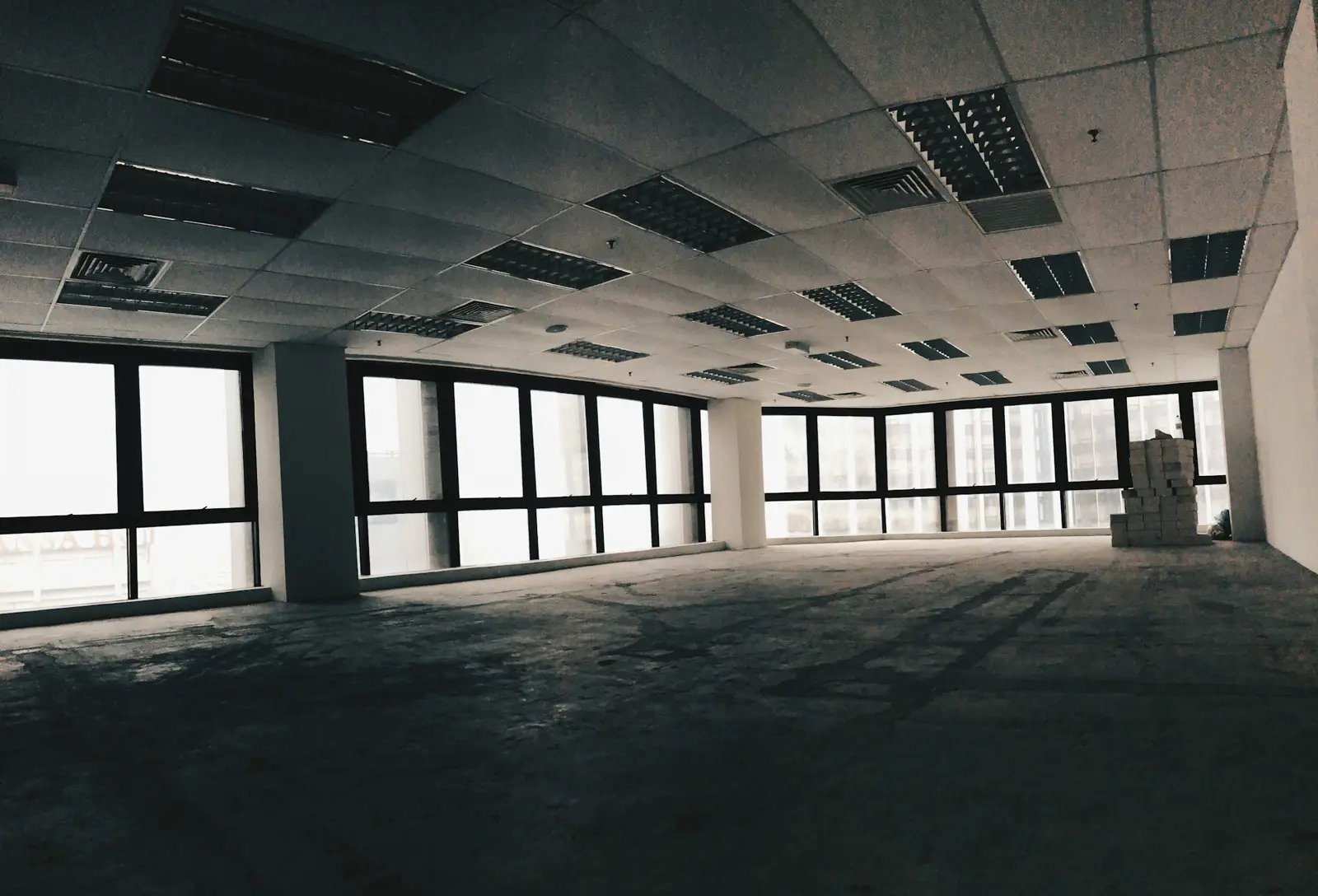
AV planning should start as soon as the new space is chosen and before the architect's construction drawings are final. That is when wall blocking for displays, floor boxes, ceiling microphone locations, rack space and cable pathways can still be added cheaply. Once walls close and ceilings go up, every change means opening finished work.
In practice, the AV integrator should sit in the same early meetings as the architect, the general contractor, the IT team and the furniture vendor. Conference table positions decide where floor boxes go. Ceiling heights decide whether a projector or a flat panel makes sense. The location of the IT closet decides how long every cable run will be.
Those cable runs matter more than most move plans assume. Leviton's cabling guide summarizes the TIA and ISO limits as a permanent link of up to 90 meters and a total channel of up to 100 meters including patch cords. Leviton also notes that copper runs beyond 100 meters are not standards compliant, so a large floor may need a second telecom room or a different design for the farthest rooms.
What does an AV installation company do during an office move?
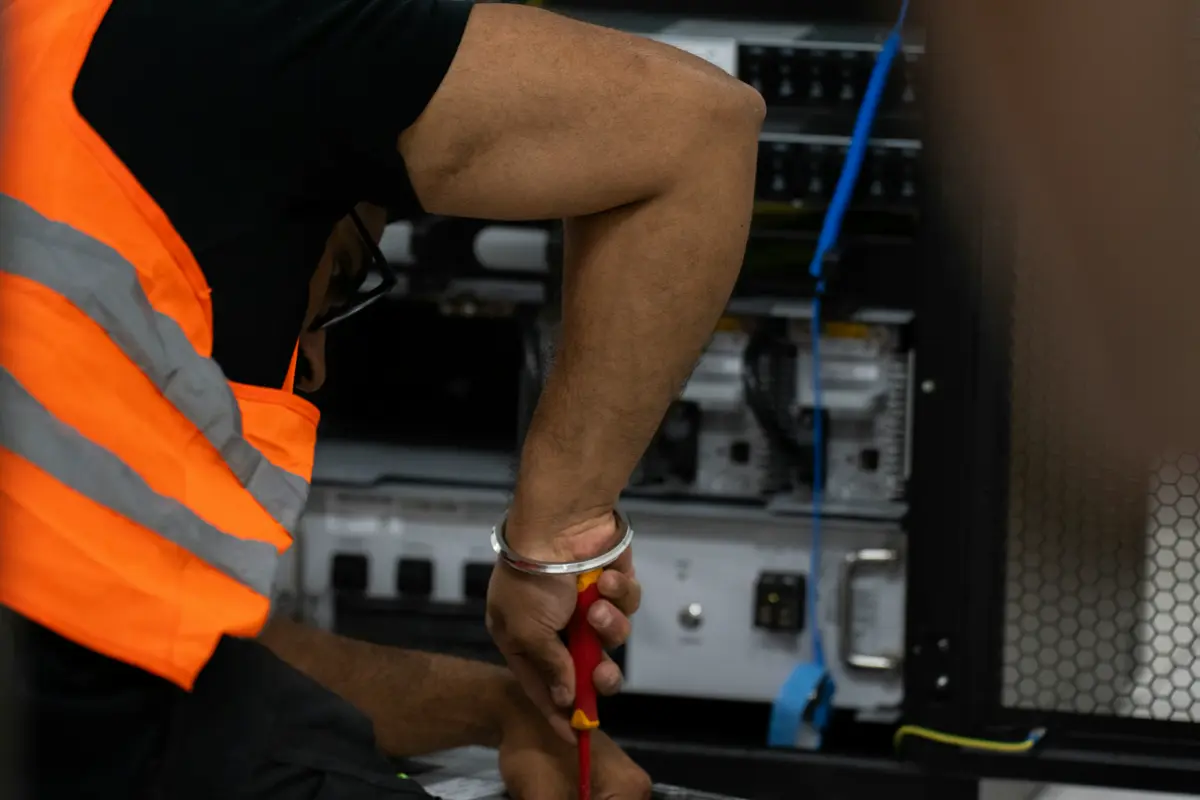
A good AV installation company handles the technology side of the move from survey to sign-off. That usually covers assessing existing equipment, designing each room, coordinating cabling and power with other trades, installing and programming systems, testing everything before staff arrive, and supporting the first week of meetings in the new office.
- Survey both sites. Document what is installed today, what works, what is near end of life, and how each room is actually used.
- Design the rooms. Choose displays, cameras, microphones, speakers and control for each space, and produce drawings the contractor can build around.
- Coordinate with the trades. Agree on blocking, power outlets, conduit, ceiling openings and rack locations with the general contractor and the electrician.
- Pull and certify cabling. Run, terminate, label and test low-voltage cabling before the ceilings close.
- Install, program and test. Mount the equipment, configure the conferencing platform, tune the audio and test every room against the design.
- Train and support. Walk staff through the rooms and stay available for the first days of real meetings.
Do you need a permit for AV and low-voltage work in NYC?
Usually not for the low-voltage part, but often yes for the power behind it. Under Local Law 128 of 2024, wiring designed to run below 50 volts for signaling, communication, alarm and data counts as low-voltage electrical work and needs no electrical permit when a licensed electrician or a qualified person does it.
The same law lists exceptions that only a licensed master or special electrician may handle. They include wiring tied to life safety systems and any point where a low-voltage system connects to a control circuit that switches light, heat or power. In a conference room, that can include lighting control integration, so confirm early who handles that interface.
New power is a separate track. The NYC Department of Buildings says an electrical permit is required for most electrical work, performed by DOB-licensed electrical contractors, and that work done without a required permit can bring violations and fines for both the building owner and the person who did it. Display walls, racks and ceiling projectors almost always need dedicated outlets, so that scope belongs on the electrician's permit schedule from the start.
Timing is the other city-specific constraint. If permitted construction work has to happen before 7 a.m., after 6 p.m. or on a weekend, the DOB requires an After Hours Variance, filed at least two business days before the first work day. Buildings also set their own rules for freight elevators, loading docks and noisy work, so ask the landlord for the contractor rules before scheduling the install.
Should you move your old AV equipment or buy new?
Move equipment that is recent, still supported by its manufacturer and suited to the new room sizes. Replace equipment that is near end of support, built for a room layout you are leaving behind, or would cost nearly as much to remove, pack, remount and reprogram as to buy new. Make the decision room by room during the survey.
- Usually worth moving: recent flat-panel displays, current video bars and room systems that still receive firmware updates, and rack equipment with spare capacity.
- Usually worth replacing: projectors and screens sized for rooms that no longer exist, analog or proprietary cabling, and conferencing hardware that no longer receives software updates.
- Always re-test: anything that moves should be re-commissioned in the new space, because room acoustics, seating distances and network settings all change.
A move is also the natural time to fix cabling that was never done well. Our guide to structured cabling for growing offices explains why a clean, labeled cable plant pays off over the life of a lease.
What does conference room AV installation involve in a new office?
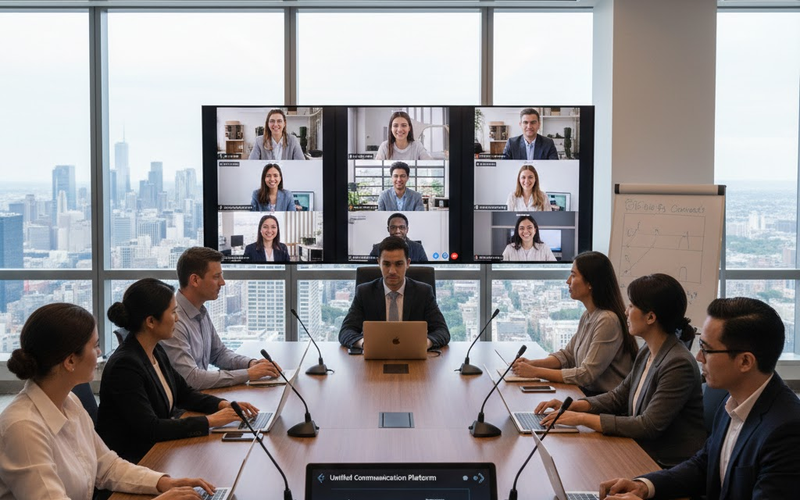
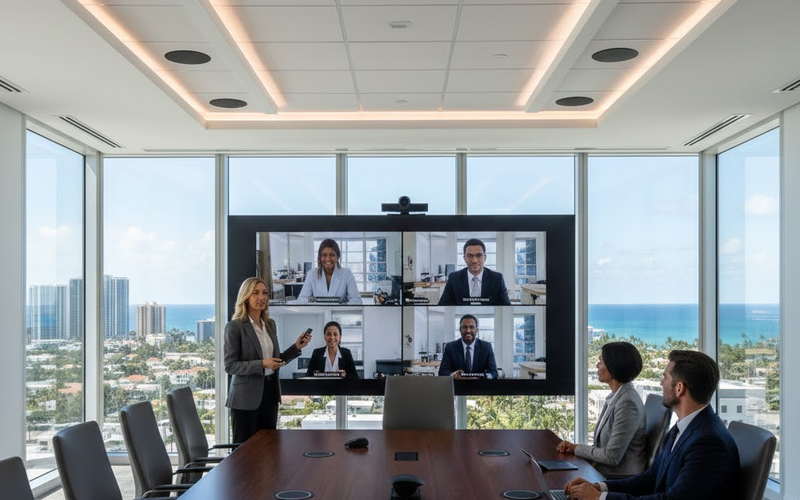
Conference room AV installation means matching the display, camera, microphones, speakers and control system to the size and use of each room, then installing them with the cabling, power and network they need. In a relocation, every room can be designed from scratch instead of retrofitted, which is the best chance to get it right.

At 3 Times Square in Manhattan, DIST's work included conference room technology with AI-powered camera systems, Sony projectors with professional screens, high-fidelity speakers and enterprise-grade network infrastructure, with Zoom video bars in the conference rooms and an equipment rack tying the systems together. A build like that only comes together when the rack, the network and the room hardware are designed as one system.
On site, a few checks prevent most move-in problems:
- Confirm sight lines and seating before ordering displays, so the farthest seat can read the content on screen.
- Plan microphone coverage around the final furniture layout, because table and ceiling microphones depend on where people actually sit.
- Give the rack ventilation and access. Equipment closets in new fit-outs are often undersized or shared with other trades.
- Agree network ports and settings with IT before installation day, so conferencing devices register on the first try.
How do you choose an AV installation company in NYC?
Choose a company that has installed in occupied Manhattan buildings, can show comparable recent projects, coordinates with licensed electricians and your IT team, and offers support after move-in. Ask how it handles drawings, testing, documentation and after-hours scheduling. A low hardware quote means little if the installer cannot keep pace with the construction schedule.
It also helps when one partner covers AV, low-voltage cabling and IT, because fewer handoffs mean fewer gaps on move-in day. DIST works from offices in New York and Miami, so companies planning a commercial AV installation in Miami alongside a Manhattan move can use one team and one set of standards in both cities. If your move also brings a change of IT provider, see our overview of IT support in NYC, or contact DIST to book a survey.
About the author: Gerson Carrillo is Director Of Professional Services at DIST, where he works on the company's commercial AV, IT and low-voltage projects for businesses.
Planning an office move in New York? Talk to DIST about an AV survey of your new space before the construction drawings are final. Call DIST: Miami (305) 222-7711 · New York (212) 206-0794.
Frequently asked questions
How long does AV installation take for an office move?
It depends on the number of rooms, the cabling scope and the construction schedule. Cabling has to be pulled and tested before ceilings close, while displays and conferencing equipment go in near the end of the build-out. A site survey of the new floor is the only reliable way to set a timeline for your specific move.
Does an AV installer need a license in New York City?
Low-voltage work under 50 volts for communication and data can be done without an electrical permit by a licensed electrician or a qualified person, under Local Law 128 of 2024. New power circuits, and connections to control circuits that switch lighting or power, require a licensed master or special electrician working under the city's electrical rules.
Can AV work be done after hours in Manhattan?
Yes, and many offices prefer it. Permitted construction work before 7 a.m., after 6 p.m. or on weekends needs a DOB After Hours Variance filed at least two business days ahead. Buildings also set their own rules for after-hours access, freight elevators and noise, so the installer should confirm both before scheduling.
What should we share with the AV company before the survey?
Share the floor plan, headcount, the meeting platforms you use, a list of rooms and how each one is used, and any standards from your other offices. Also flag client-facing rooms, spaces that host large town halls, and the target move-in date. That lets the installer scope and price the work accurately the first time.
Is it cheaper to reuse existing AV equipment?
Sometimes. Removing, packing, transporting, remounting and reprogramming equipment all take labor, and older gear may not suit the new rooms or still receive updates. Reuse works best for recent displays and supported conferencing hardware. Ask the installer to price both options room by room so the comparison reflects your actual equipment.
Does DIST also handle commercial AV installation in Miami?
Yes. DIST has offices in New York and Miami and works with businesses across the US. Companies relocating or opening offices in both cities can use the same design standards, equipment choices and support process, which keeps meeting rooms consistent for staff who travel between locations and simplifies management for IT.
Sources
- NYC Local Law 128 of 2024 (low voltage electrical work) (nyc.gov)
- NYC Department of Buildings: Electrical Permit (nyc.gov)
- NYC Department of Buildings: After Hours Variances (nyc.gov)
- Leviton Extended Distance Application Guide (TIA/ISO channel limits) (leviton.com)